Golf for Ladies in 1905
Harry Vardon devoted a chapter of The Complete Golfer to women’s golf. Read today, it is a curious mixture of Edwardian attitudes and advice that was well ahead of its time.
By GolfProse · · 4 min read
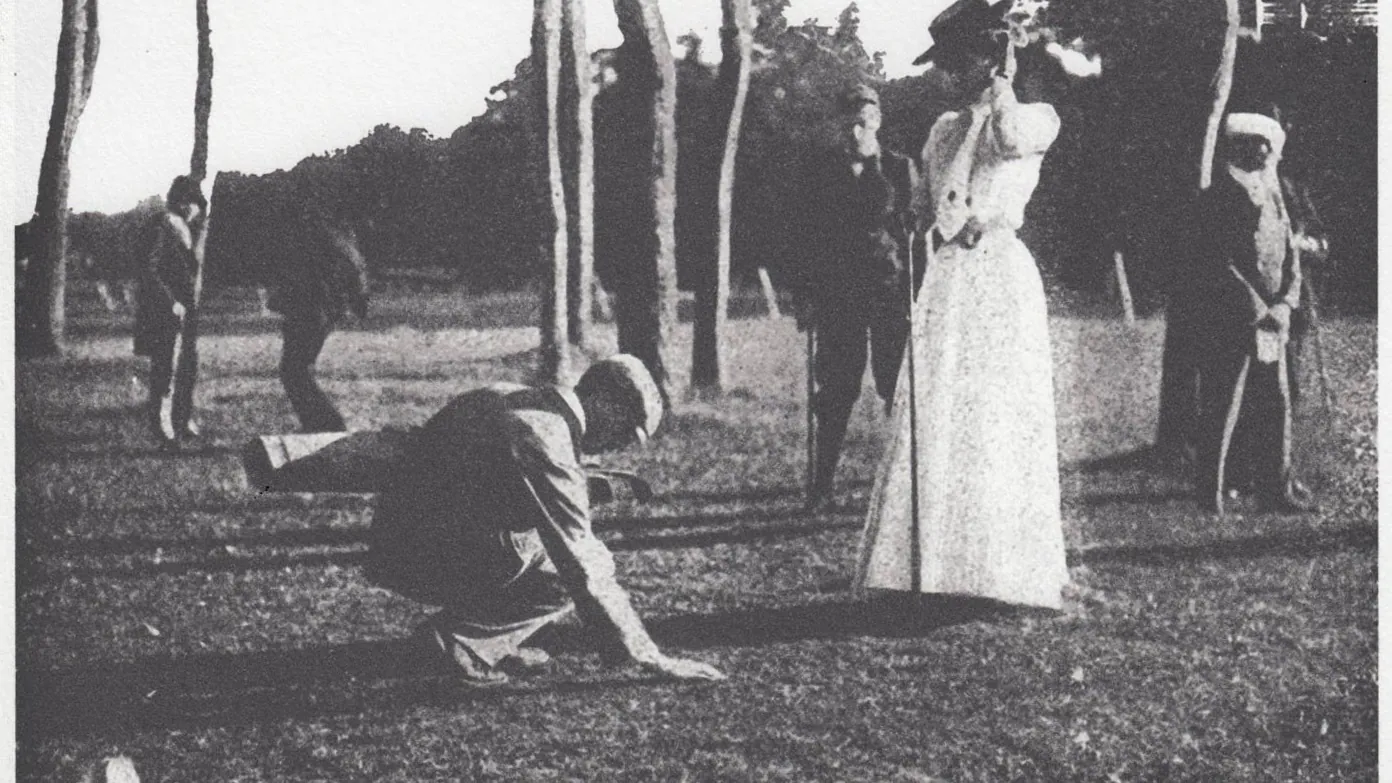
When Harry Vardon published The Complete Golfer in 1905, women had been playing organised golf in Britain for some decades, and the Ladies’ Golf Union had existed since 1893. Yet the question of whether golf was really a game for women was still being argued in clubhouses and drawing rooms. Vardon’s chapter on golf for ladies steps into that argument, and it is worth reading carefully, for what it reveals about its age and for what it gets surprisingly right.
The argument at home
Vardon begins with a gently comic picture of family life: wives and sisters keen to take up the game, and husbands and brothers producing objections that he likens to the pleadings of a King’s Counsel. He declines to take sides, though he admits some sympathy for separating men’s and women’s golf on large and crowded courses.
Then he says something rather more interesting. “Golf is essentially a sport of freedom,” he writes, and he likes to see a woman on the links dressed however she finds most comfortable, playing as if nothing in the world existed except nature, the ball and the flag. For 1905, that was a generous thing to say.
The question of dress
Much of the chapter is about clothes, and here the period shows most clearly. Edwardian women played in long skirts, fitted jackets and, often, large hats, and Vardon thought this was hopeless. He had watched women golfers in the United States and admired them enormously. The American player, he says, dressed for golf alone: no hat, or a small soft tam o’shanter, sleeves tucked up, and plenty of nails in the soles of her shoes.
The average English player, by contrast, seemed to him to think too much about fashion and too little about freedom of movement. He has, he says bluntly, no faith in the future of women who play in big hats and smooth soles. It is easy to smile at a man lecturing women about their wardrobes, and Vardon himself calls it a lecture. But his point is a practical one, and he applies it equally to men: nobody can play good golf if they are not properly equipped for it.
Better pupils than the men
The heart of the chapter is far more encouraging. Vardon reports that the standard of women’s golf was rising every season, so that the best women now needed a fine male golfer to give them a handicap of a third. He had taught many women the first principles of the game, and found them excellent pupils, “better generally than the men learners.” They listened more closely, he says, and remembered more.
His central argument is that women should not be fobbed off with a lesser version of the game. Many were told they needed special clubs and special methods. Vardon disagreed. Women might not drive as far, he concedes, but otherwise “the man’s game and the lady’s game are the same in principle and in practice.” He has no separate instructions to give, and simply refers his women readers to the rest of the book.
Swings and clubs
Two pieces of common advice particularly annoyed him. The first was that women should never take a full swing, but should content themselves with a half swing, supposedly for physical reasons. Vardon thought this was exactly backwards. The cramped half swing, he argues, makes the body labour, while a full three-quarter swing lets the arms do the work as they should. From the tee, where the aim is distance, half shots have no place.
The second was the habit of giving women featherweight clubs. A man’s club, he points out, is not the heaviest he could swing but simply the weight that works best, and there was no reason a woman should not use a club of good average weight. A very light club, he says, makes the swing shorter and less controlled, because the player cannot feel the head at the end of the shaft. At most, a woman might want a shaft a little shorter.
He found only one fault that seemed especially common among his women pupils: letting the toe of the club point upwards at the top of the backswing, which he put down to a loss of control in the wrists. He estimated that three in five of the women he had watched did it, and prescribed a slower backswing and a regular check on the position of the club at the top, as he describes in his chapters on driving.
Reading it now
Some of the chapter has dated badly. There is a slightly arch passage about women swearing on the course, and Vardon cannot resist suggesting that women too often treat golf as only a little game, or insist on working things out for themselves after a couple of lessons. His closing advice, to “do the rest like a man, and not as if there were a special woman’s way,” uses language no one would choose today.
Yet the substance of that advice is sound and, for its time, quietly progressive. Vardon refused to believe that women needed a diminished game, lighter clubs or shorter swings. He thought they should be taught properly, equipped properly and taken seriously, and he said that they learned faster than men. Strip away the Edwardian phrasing and he is arguing that golf is one game, open to anyone willing to learn it well.
That is a better position than many golf clubs held for decades afterwards. For more on Vardon’s teaching, see our introduction to Harry Vardon’s lessons, and for the chapters he sends his readers back to, start with “Driving: Preliminaries.”
More from People & History
See all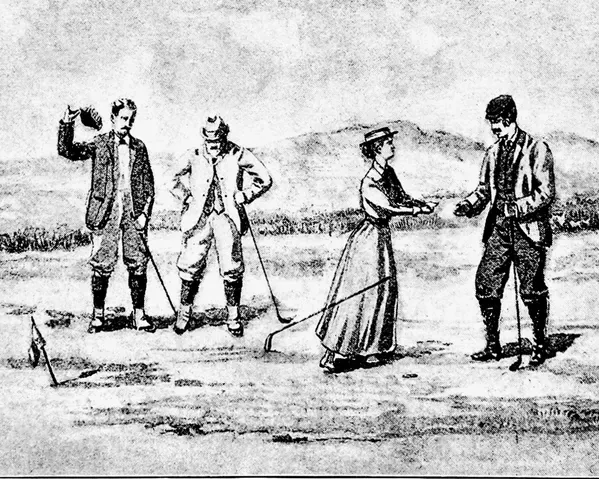
The Spirit of the Early Amateurs
Talent, character and a different kind of greatness. What the golfers of a century ago can still teach us about playing for the love of it.
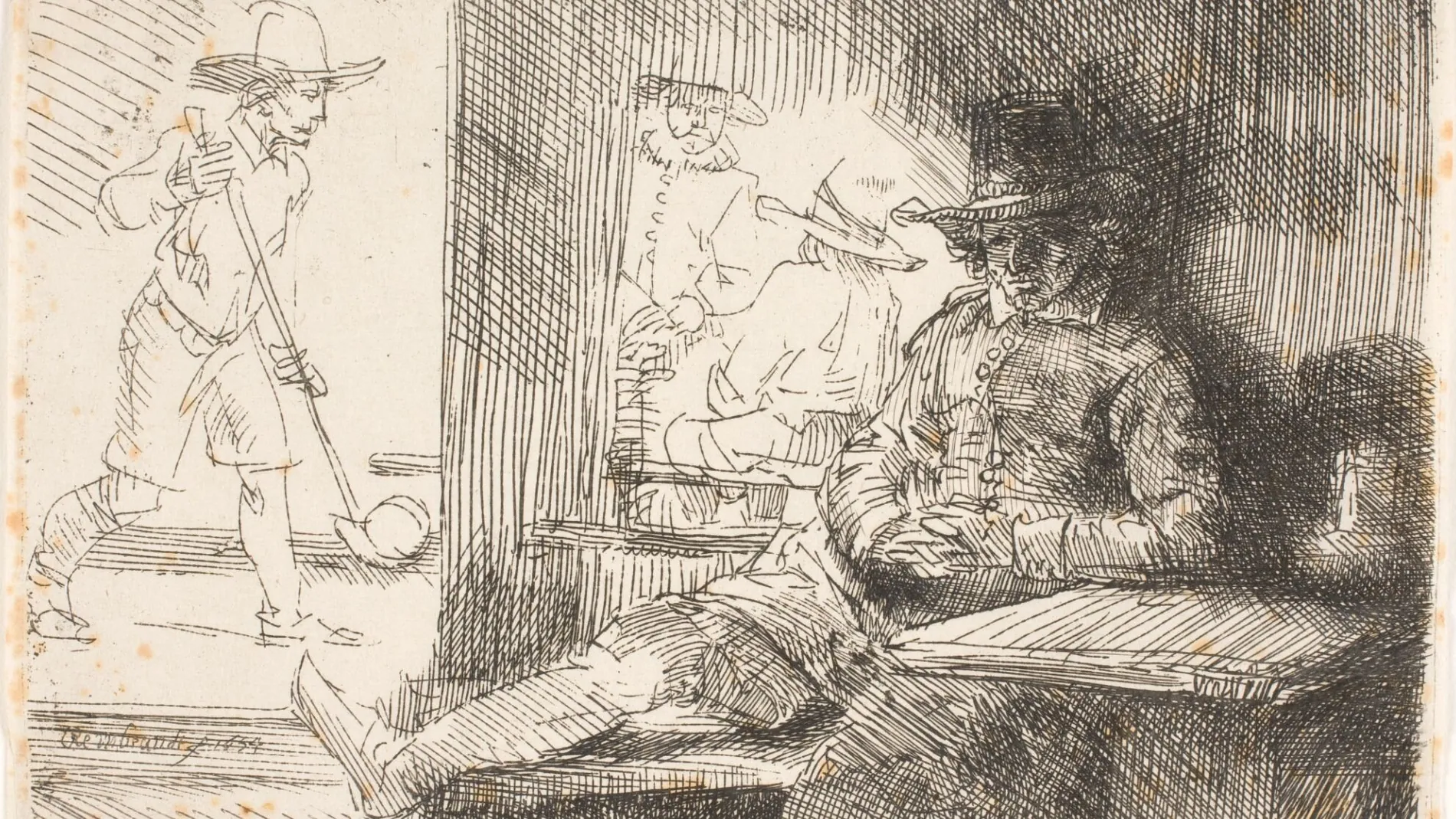
Before Golf Was Golf
Dutch players on the ice, Scottish golfers in jail, and a Rembrandt etching. On the long, disputed and delightful prehistory of the game.
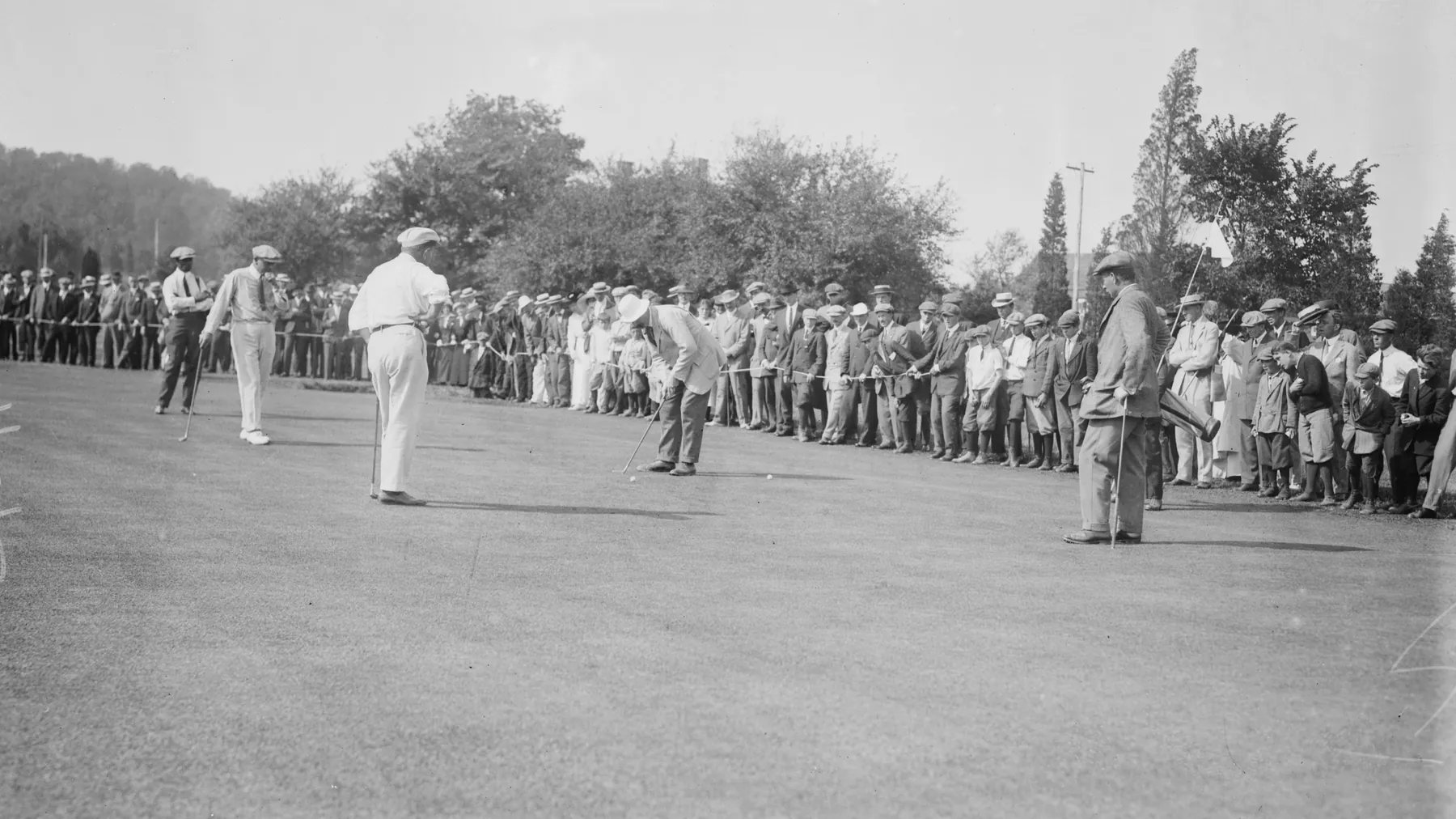
Vardon in America
In 1900 the greatest golfer in the world spent the best part of a year touring the United States. He came home with a national championship, a sheaf of newspaper cuttings and a firm conviction that the young American game was going places.