The Spirit of the Early Amateurs
Talent, character and a different kind of greatness. What the golfers of a century ago can still teach us about playing for the love of it.
By GolfProse · · 3 min read
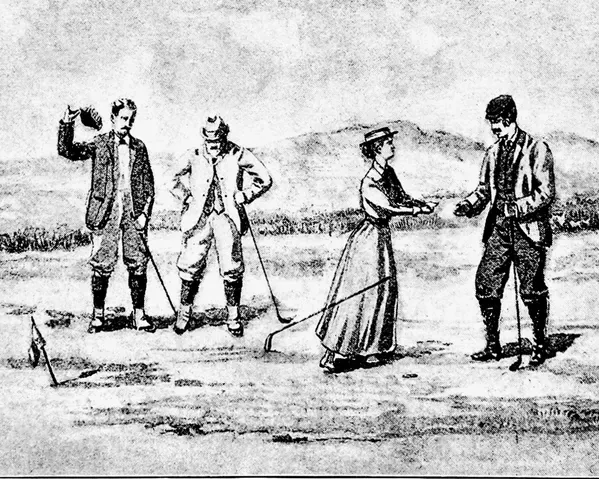
For much of golf’s early history, the most celebrated players in the game were not paid to play it. Professionals made clubs, kept the greens, taught the members and played for prize money, but the amateur was the figure of romance: the gentleman who played superbly for nothing, simply because he loved the game.
That world had its snobberies, and we should not be too nostalgic about them. But the amateur ideal also left something worth keeping, and the best place to find it is in the words of the professionals who played against them.
Vardon’s giants
Harry Vardon was the greatest professional of his era, and in the last chapter of The Complete Golfer he looks back over the game’s history with something close to awe. He confesses that he sometimes feels “a twinge of regret” that he never played with, or even saw, “such giants of the past as Allan Robertson, David Strath, the Dunns, Willie Campbell, Willie Park, senior, or the famous young Tom Morris.” And he holds up “the heroic example of rare old Tom Morris” as proof that a golfer can keep playing a good game to the end of his days.
What is striking is the generosity. He writes about the great players of his own day in the same spirit, as friends rather than rivals, with no trace of resentment. It is the voice of a man who regarded golf as something larger than any one player, himself included.
A shot from the water
One of the amateurs Vardon admired most was Frederick Tait, a Scottish soldier and twice Amateur Champion, who died in the Boer War. Vardon knew him well: when Vardon played his great challenge match against Willie Park, Tait acted as Park’s referee.
In the chapter on the links he had played, Vardon describes Tait’s most famous moment. In the final of the 1899 Amateur Championship against John Ball, Tait’s ball finished in a greenside bunker that had filled with rainwater, “in which the ball was floating.” Tait “chipped the ball out beautifully on to the green, and saved a hole which seemed a certain loss.” Vardon calls it “perhaps the most memorable shot ever played in golf.”
That a professional of Vardon’s stature would say this about an amateur’s recovery shot tells you something about the age. Brilliance was admired wherever it came from, and nerve was the highest virtue of all.
Playing for nothing
The amateur ideal survived in fiction long after it began to fade in fact. In Wodehouse’s “The Clicking of Cuthbert,” the hero, Cuthbert Banks, is clearly an amateur of the highest class. He has won the French Open and reached the semi-final of the Amateur, and he mentions it only when pressed. The woman he loves is unimpressed. “Golf!” she says. “You waste all your time playing golf.”
The joke works because the amateur golfer was, by definition, someone who did waste their time playing golf. That was the whole point. The game was not a career. It was a passion, pursued for its own sake, and the satisfaction lay in the playing.
What we can keep
Almost all of us are amateurs. We are never going to play for money, and our names will never be engraved on a trophy anyone has heard of. It can be tempting to measure ourselves against the professionals on television and find ourselves wanting.
The early amateurs offer a better model. They took the game seriously and themselves lightly. They practised hard, played fast, called penalties on themselves, and shook hands at the end whatever the result. They believed that how you played mattered as much as what you scored.
That spirit is still available to anyone with a set of clubs and a free afternoon. It is, in the end, what makes golf worth playing at all.
More from People & History
See all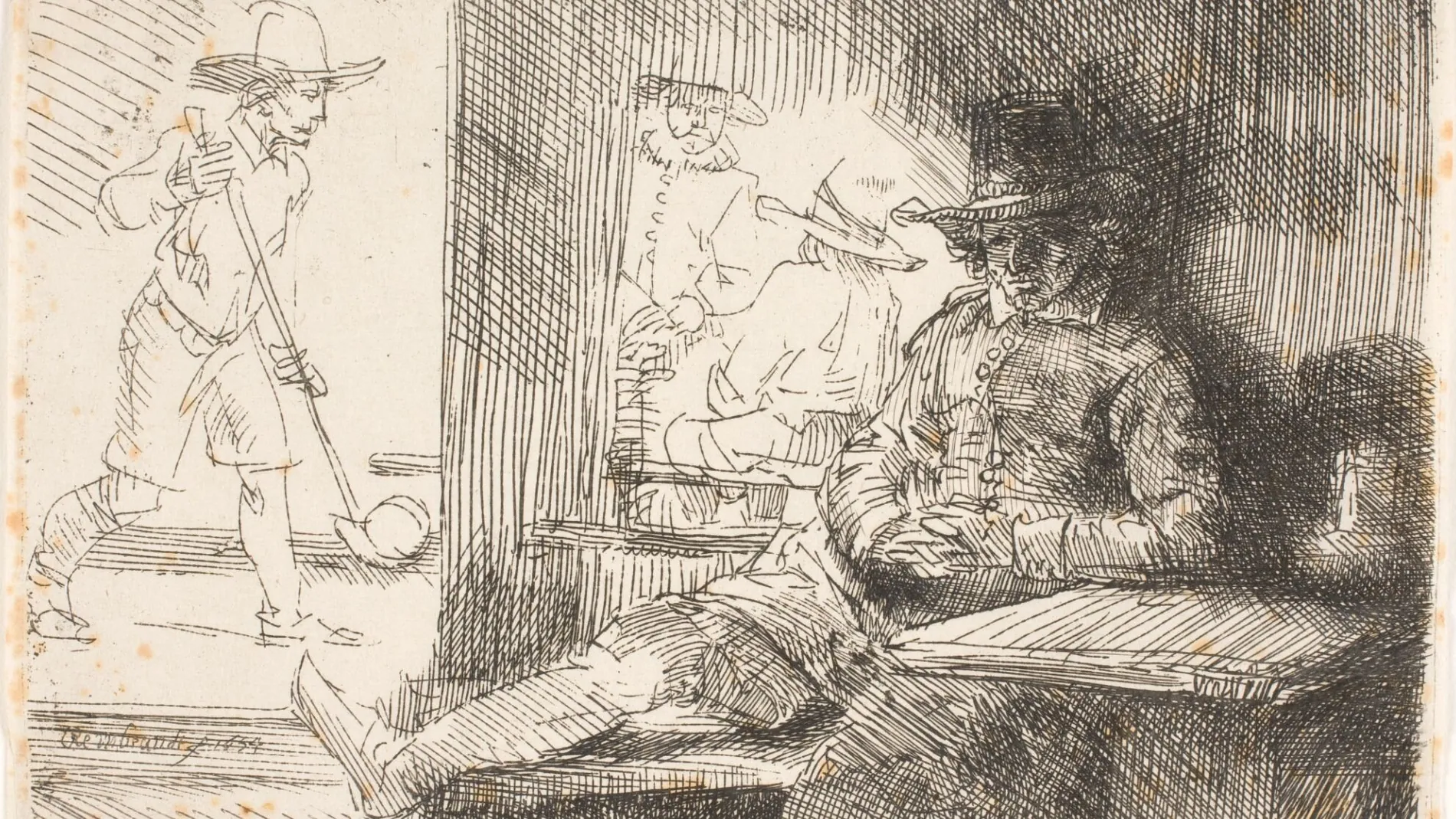
Before Golf Was Golf
Dutch players on the ice, Scottish golfers in jail, and a Rembrandt etching. On the long, disputed and delightful prehistory of the game.
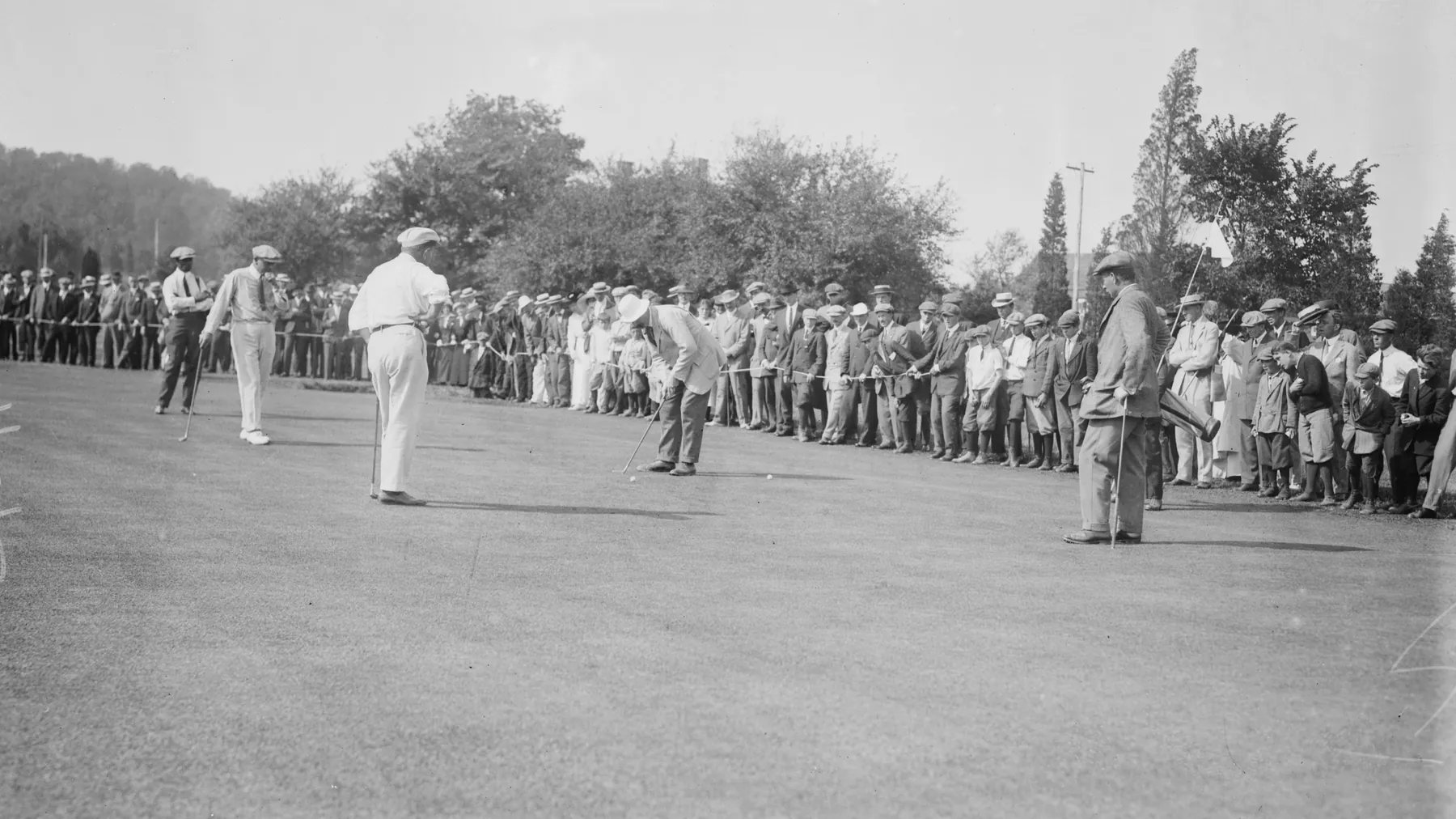
Vardon in America
In 1900 the greatest golfer in the world spent the best part of a year touring the United States. He came home with a national championship, a sheaf of newspaper cuttings and a firm conviction that the young American game was going places.
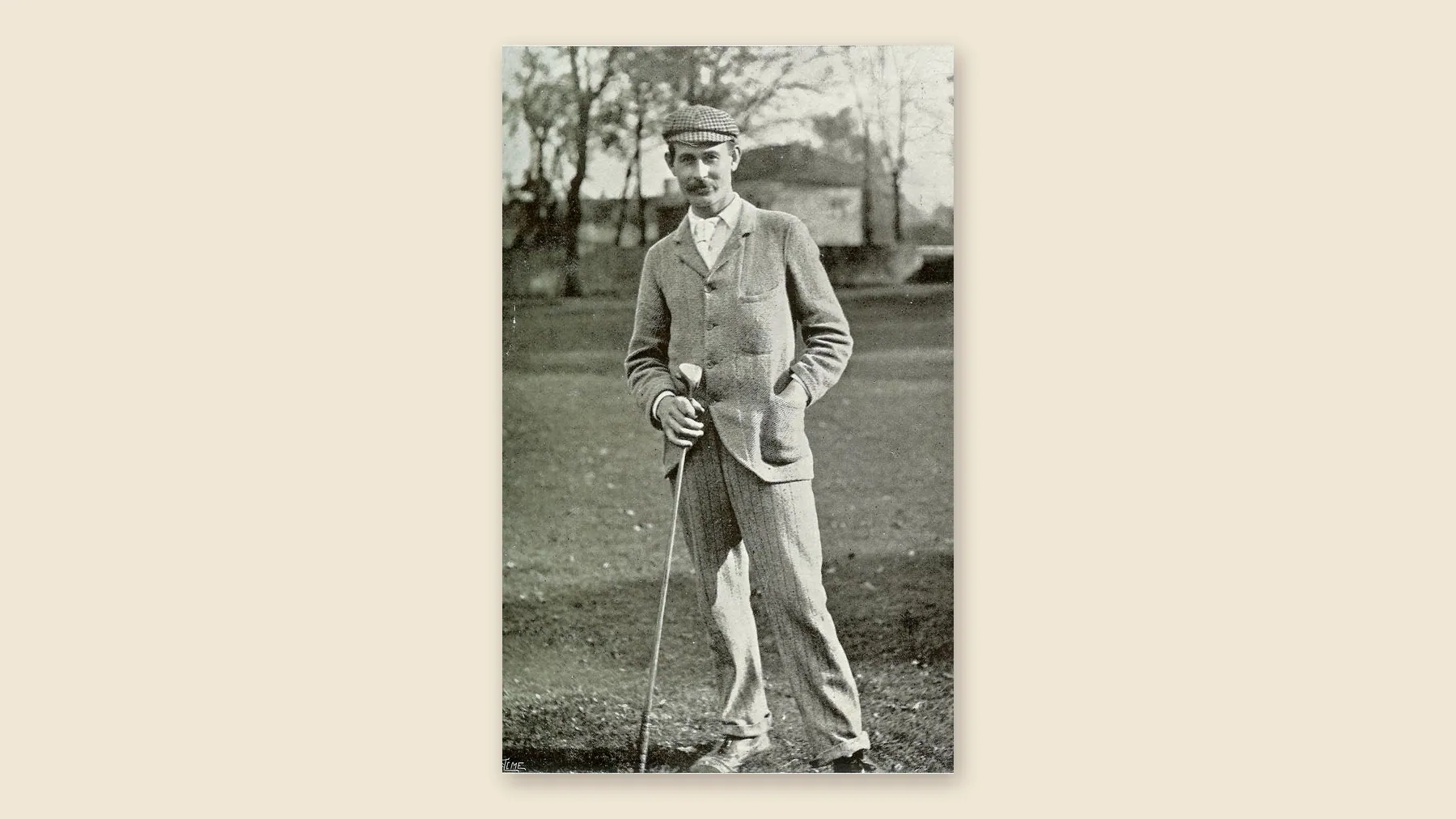
The Great Match: Vardon v. Park
Seven thousand spectators, two referees, a pair of signal flags and £100 a side. Harry Vardon’s own account of the challenge match he called the event of his lifetime.