The Great Match: Vardon v. Park
Seven thousand spectators, two referees, a pair of signal flags and £100 a side. Harry Vardon’s own account of the challenge match he called the event of his lifetime.
By GolfProse · · 4 min read
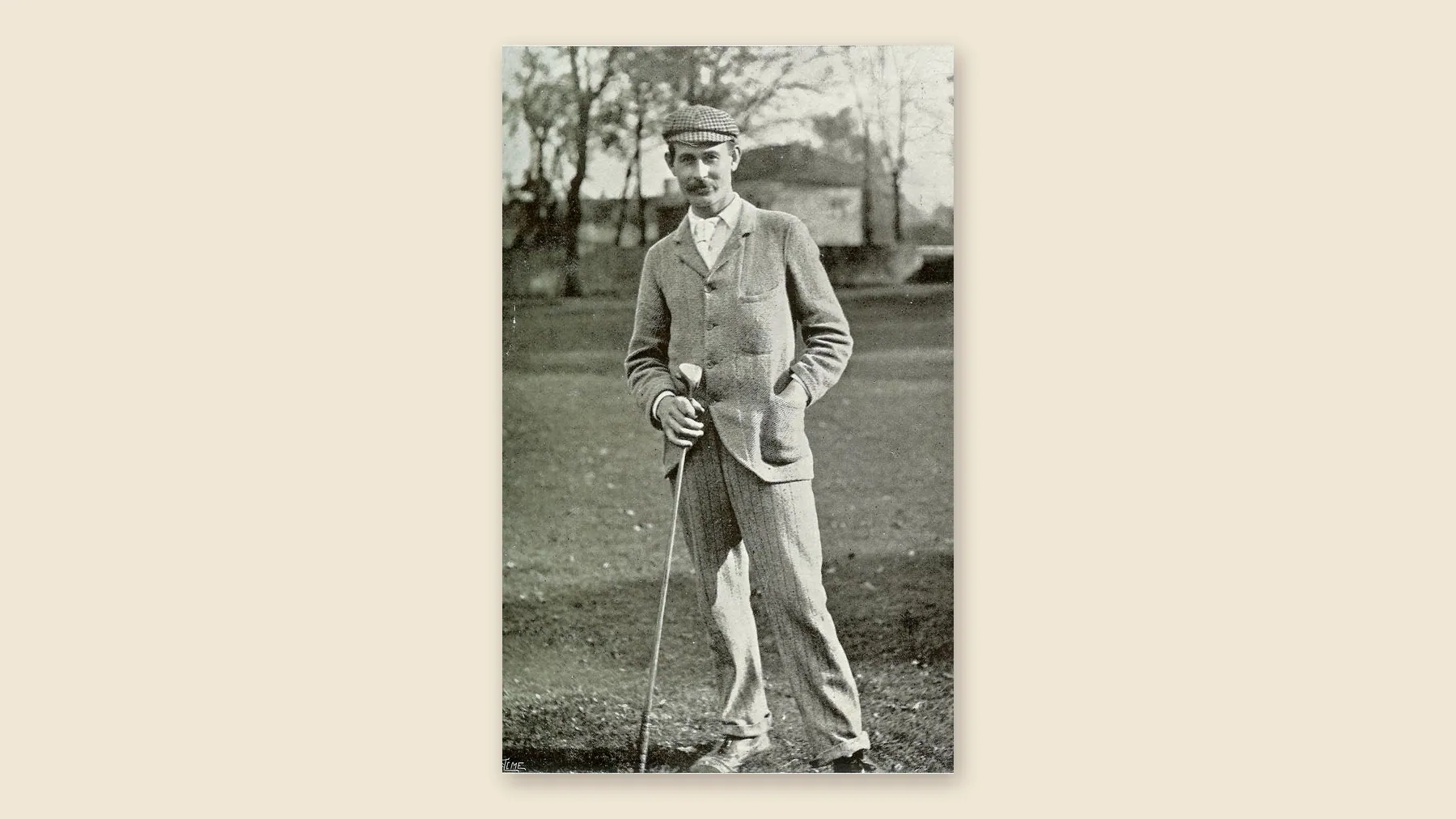
Golf today is a game of stroke-play tournaments, with fields of a hundred or more and a leaderboard at the end of the week. A little over a century ago, the matches that stirred the public most were often private challenges: one great player against another, head to head, with money on the outcome and the whole golfing world watching.
The greatest of them, by Harry Vardon’s own reckoning, was his match against Willie Park. He tells the story in “Some Reminiscences,” the second chapter of The Complete Golfer, and returns to it with evident pleasure in the book’s last chapter.
A missed putt at Prestwick
The match grew out of the Open Championship of 1898 at Prestwick. The title came down to Vardon and Park, and after three rounds Park led by three strokes. In the last round Vardon played a hole ahead, and the two men were, as he puts it, “watching each other as cats watch mice the whole way round the links.” By the turn Vardon reckoned he had wiped out the deficit.
He finished steadily, leaving Park needing a three at the last to tie. Park’s drive finished at the corner of the green and his long putt rolled up to within about a yard. Vardon, elbowed out by the crowd, could see nothing at all. He stood at the edge of the throng feeling “the most nervous and miserable man alive,” until a long, disappointed groan went up all round the green. Park had missed. Vardon did not stop to look; he knew he was champion again, and hurried away.
He is generous about his rival. Park, he says, was playing an exceedingly fine game at the time, and only the fact that Vardon was playing about as well as he ever had allowed him to win.
The challenge
Park was not content to have lost a championship by a putt. He challenged Vardon to a home-and-home match: thirty-six holes on each man’s chosen ground, for £100 a side. After some difficulty over the details they settled on North Berwick, on the East Lothian coast, and Ganton in Yorkshire, where Vardon was then the professional. North Berwick would come first.
Seven thousand at North Berwick
Vardon had never seen such a crowd. He reckoned there were fully seven thousand people on the links, and thought there might have been many more if the less devoted golfers had not gone to Edinburgh that day to see the Prince of Wales. Yet the gallery never once interfered with a stroke, and the reason was some splendid organisation.
To keep spectators informed, two flags were made: white with a red “P” for Park, and red with a white “V” for Vardon. The winner’s flag went up at the end of each hole, and both were waved for a half. At every tee a rope three hundred yards long was held by fourteen constables and as many honorary officials. Where the course crossed a dyke, a wooden boarding forty feet wide was built well out of the line of play so that the crowd could walk straight over.
Each player had a distinguished referee. Mr. C.C. Broadwood, captain of Ganton, acted for Vardon, and Lieutenant Freddy Tait, the celebrated amateur, for Park. Two Messrs. Hunter served as forecaddies, a laborious job that Vardon says they did splendidly.
Ten halves and a freak
Vardon had gone round twice in 76 in practice and felt fit. He played steadily, though his putting was sometimes erratic, and he was well aware that Park was one of the greatest putters who ever lived.
The opening was extraordinary. The first ten holes were all halved. Then, at the eleventh, came the incident Vardon remembered better than anything else in the match. Park hit a long drive, and Vardon’s tee shot pitched exactly on top of Park’s ball. Both forecaddies were sure of it. Vardon’s ball rebounded slightly and stopped about two feet behind, in a position that cramped his follow-through. He duffed his next stroke and lost the hole, ending the run of halves. He wonders, with quiet amusement, whether he had broken two records at once.
Despite that setback, Vardon finished the day two up.
The finish at Ganton
Three weeks later the match resumed at Ganton. Vardon is brisk about it: over the two legs he beat Park by 11 up with 10 to play. Bernard Darwin, visiting Ganton for The Golf Courses of the British Isles, was more expansive. Having taken a small lead at North Berwick, he writes, Vardon “played one of his most overpowering games on his own course, and never gave his adversary even the faintest of chances.”
Park, Vardon records, was disappointed but entirely sportsmanlike, and was generally acknowledged to be the greatest match-player of his time. It is typical of Vardon that he takes no pleasure in crowing over a beaten opponent, and declines to make much of his own achievement.
The event of a lifetime
What he does insist on is the scale of the occasion. Golfers who had taken up the game more recently, he says, could have no idea of the stir the match caused. More was written and said about it than about any other match he played, and its gallery was the largest he had ever seen or heard of. His summing-up is simple: “It was the event of my lifetime.”
There is a footnote to the story. Vardon played against Park and Tait once more, in an England versus Scotland foursome at Ganton, partnered by John Ball. It was the last important match Tait played before going to the war in South Africa, where he was killed. You can read more about him, and the amateur world he belonged to, in The Spirit of the Early Amateurs.
More from People & History
See all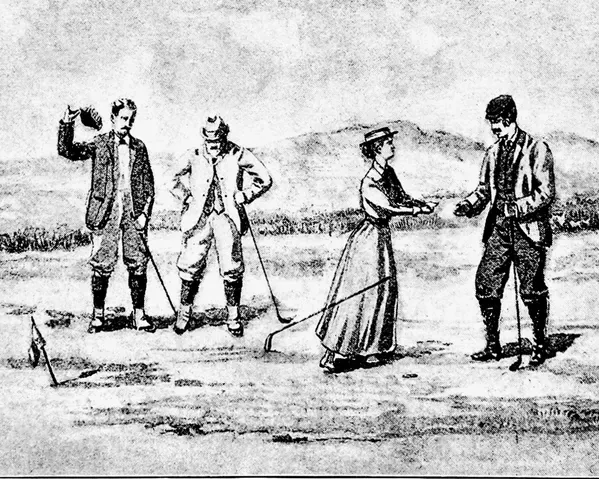
The Spirit of the Early Amateurs
Talent, character and a different kind of greatness. What the golfers of a century ago can still teach us about playing for the love of it.
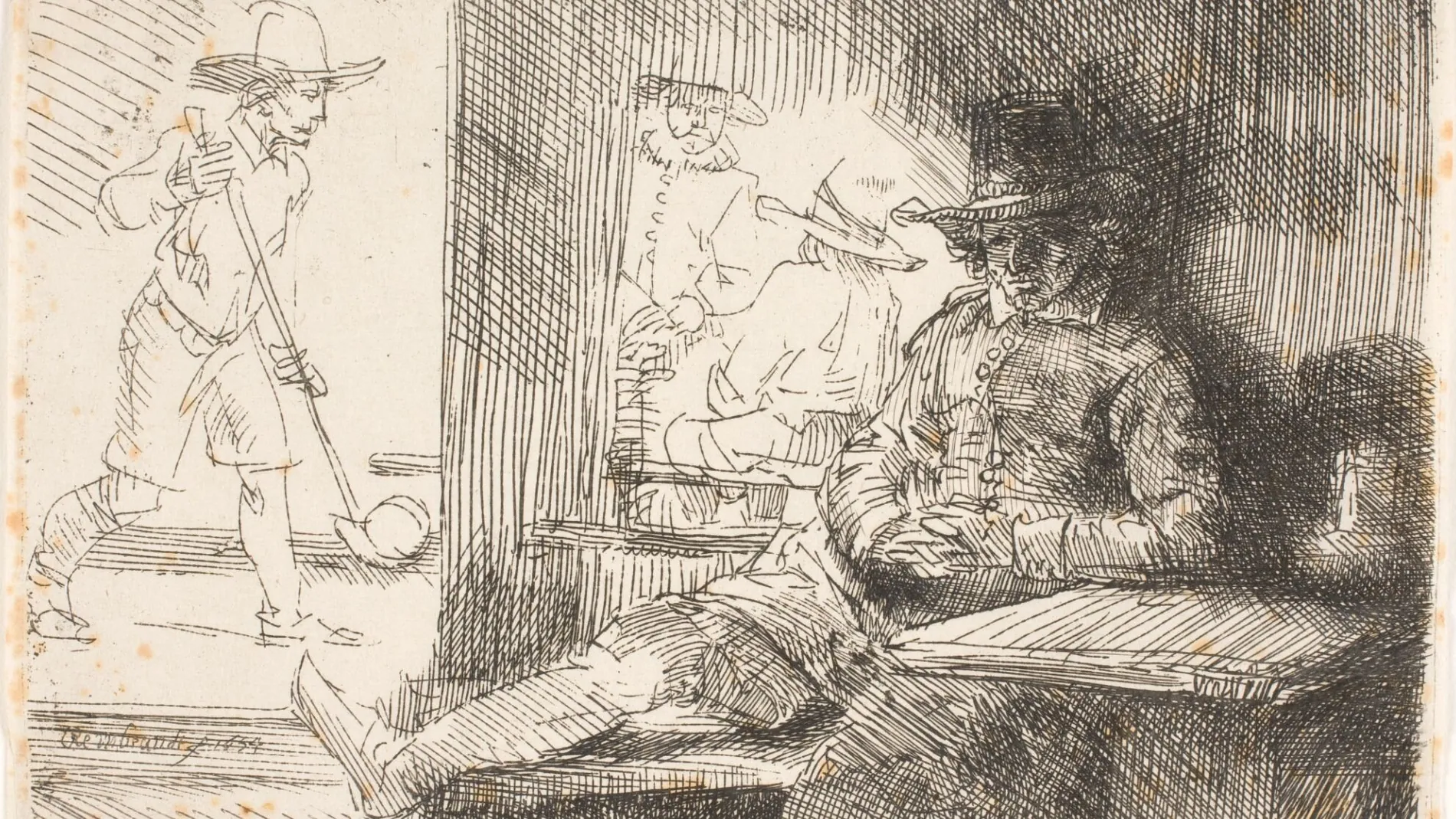
Before Golf Was Golf
Dutch players on the ice, Scottish golfers in jail, and a Rembrandt etching. On the long, disputed and delightful prehistory of the game.
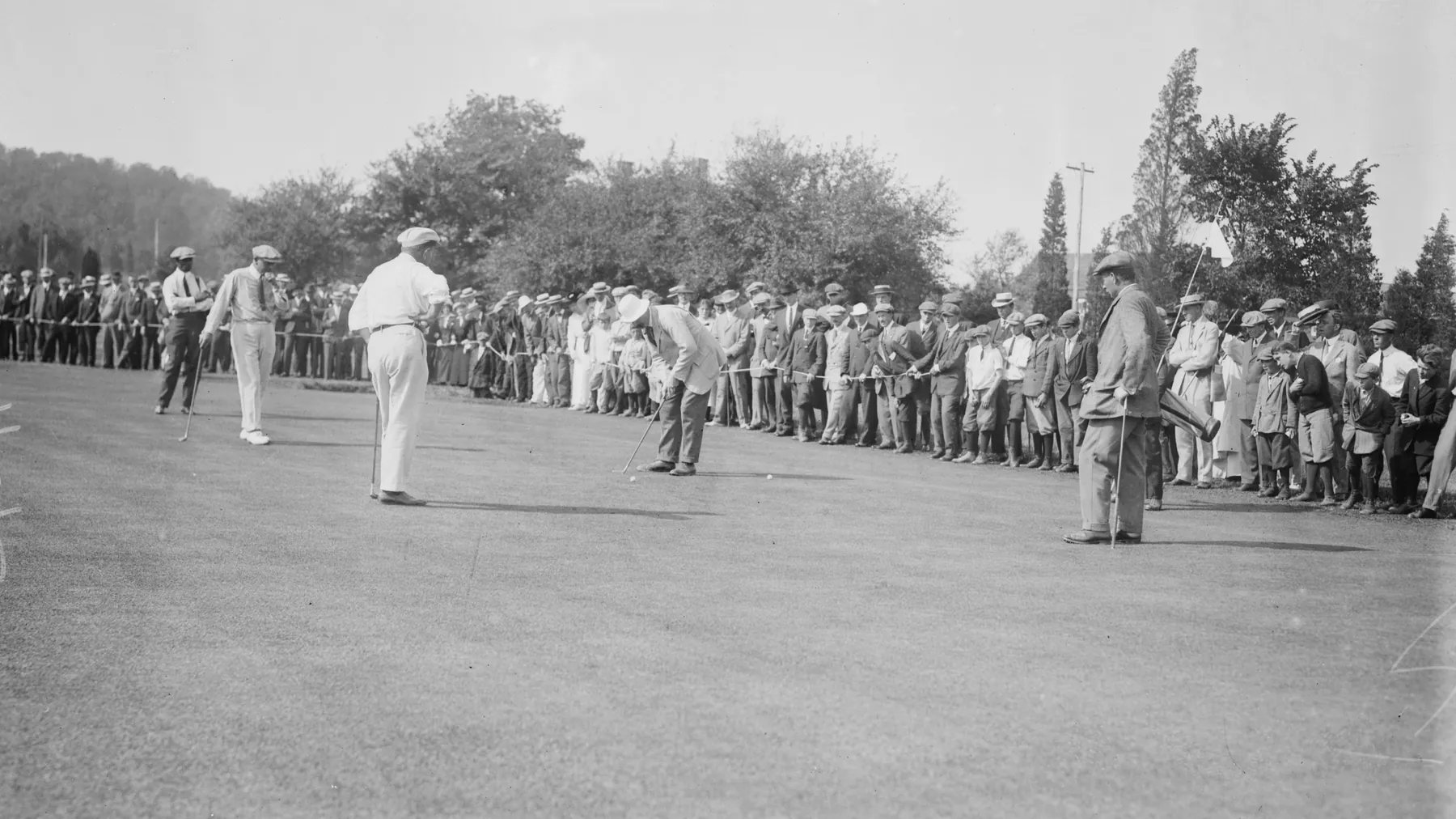
Vardon in America
In 1900 the greatest golfer in the world spent the best part of a year touring the United States. He came home with a national championship, a sheaf of newspaper cuttings and a firm conviction that the young American game was going places.