Where the fairway meets the sea.
Wind, sand and short grass by the shore: what makes seaside golf the oldest and still the most beguiling form of the game.
By GolfProse · · 3 min read
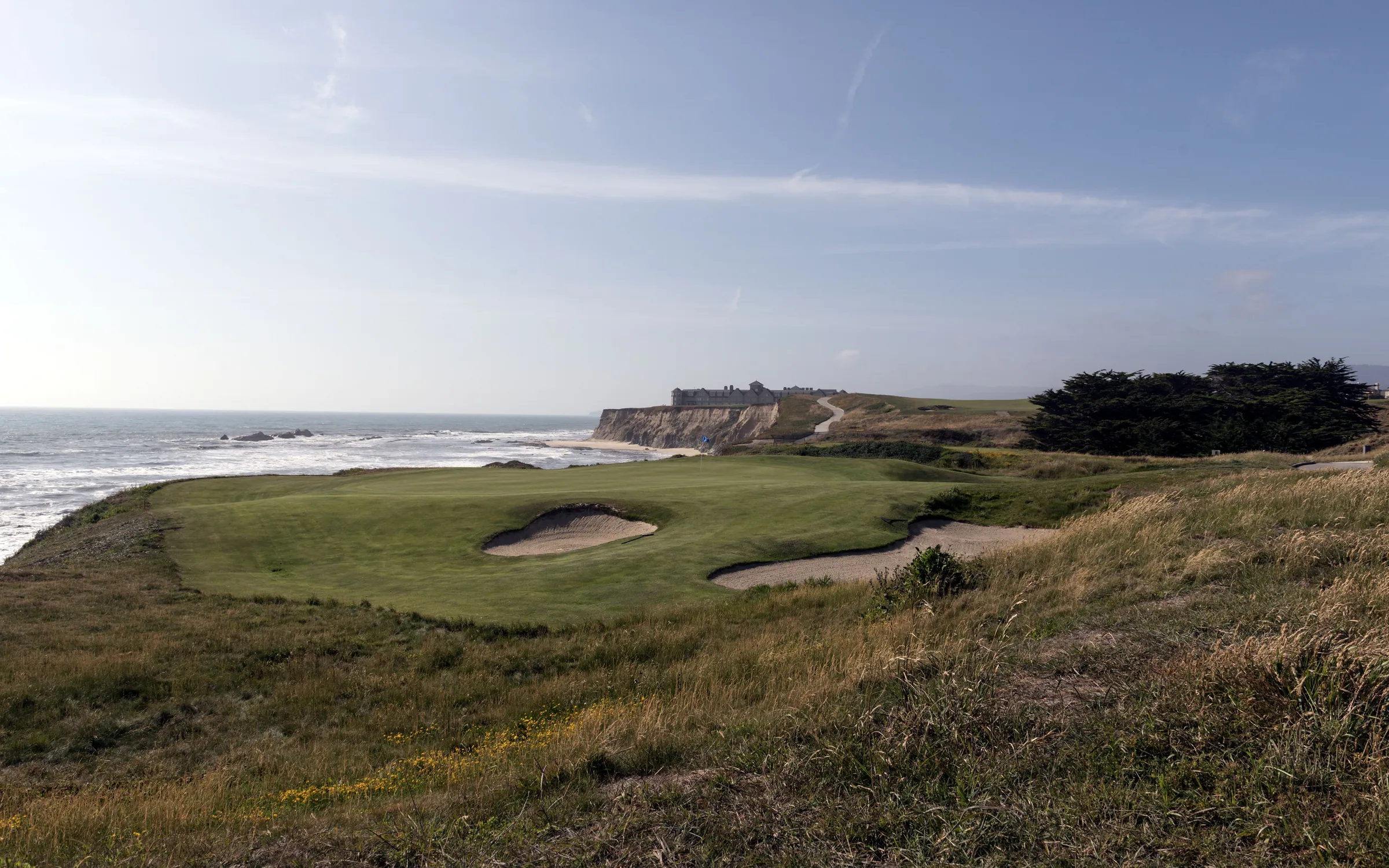
There is a particular moment on a seaside course when you crest a rise and the sea appears, wide and grey or wide and glittering, filling the whole edge of the world. The green you are aiming at seems suddenly very small. The wind, which you had half-forgotten about on the sheltered holes, announces itself again. And you remember why people have been playing golf beside the sea for as long as there has been golf.
What a links really is
The word gets used loosely now, for almost any course with few trees, but “links” has a precise and rather lovely meaning. It comes from an old word for rising ground, and in Scotland it described the strip of sandy land that lies between the beach and the farmland behind it: dunes, hollows and ridges, shaped by the wind and held together by tough grasses. The land was poor for crops, so it was left to sheep, rabbits and, eventually, golfers.
Everything that makes links golf distinctive follows from that ground. The sandy soil drains quickly, so the turf is firm and the ball runs. The grasses are fine and close-cropped. Many of the old bunkers are said to have begun as hollows where sheep sheltered from the wind and wore away the turf. And there is the wind itself, which turns a modest hole into a long one, or a long one into a drive and a pitch, depending on which way it blows when you arrive.
Darwin’s tour of the coast
In 1910 Bernard Darwin, the finest golf writer of his age, published The Golf Courses of the British Isles, a tour of the great courses of England, Scotland, Ireland and Wales. You can read all of it in the Library, and the seaside chapters are among the best.
Darwin is wonderful on the wind. Writing about the Old Course at St Andrews, he admits that the holes “do not look very long when Braid is playing them with the wind behind him, but it is an entirely different matter when we have to play them ourselves with the wind in our teeth.” Every golfer who has played by the sea will recognise the feeling: the course you watched the professionals take apart is not the course you meet.
He is wonderful, too, on the way seaside greens demand a proper shot. “A plateau usually demands of the golfer that a shot should be played,” he writes; “it will not allow him merely to toss his ball into the air with a lofting iron and the modest ambition that it may come down somewhere on the green.” It is a sentence that describes half the charm and most of the frustration of links golf.
Playing the ground
The great lesson of the seaside is that the ground is part of the game. On a soft inland course you fly the ball to the flag and it stops. By the sea, the ball lands and keeps going, and the contours decide where it ends up. The best shot is often low and running, played to a spot well short of the green and allowed to feed on. Golfers raised on target golf find this maddening at first and then, very often, find they never want to play any other way.
It also makes the game more democratic than it looks. A long hitter gains less when the ball runs for everyone, and a thoughtful player who can keep the ball under the wind and read a slope can hold their own against a stronger opponent. The course rewards imagination as much as power.
Cliffs, dunes and lighthouses
Not every seaside course is a true links. Some sit on clifftops, with the fairways perched above the water and the ocean as a hazard you can see but never quite reach. Others run through great dunes, with each hole hidden from the next. What they share is the sense of playing at the edge of something bigger than the game: the weather coming in off the water, the gulls overhead, the light changing from hole to hole.
That is why golfers travel so far to play them, and why Darwin, a man who had seen every great course of his day, kept coming back to the coast.
Before you go
If you are planning a trip to the seaside, take one more club than you think and keep the ball low. Walk if you can; the ground makes more sense on foot. And before you go, read the chapter on the region in Darwin’s book. A century has changed the courses, but it has not changed the wind.
More from Places
See all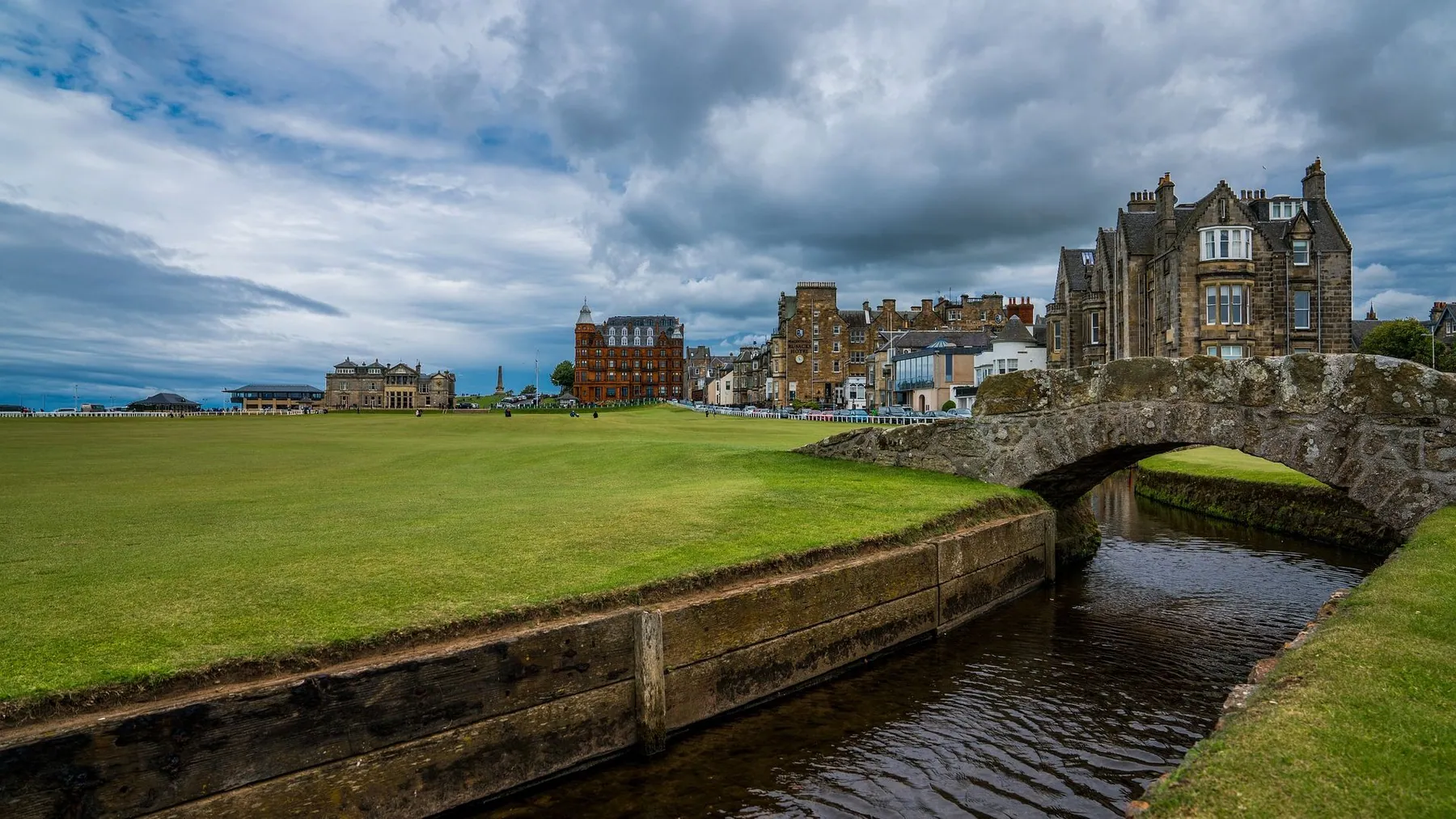
The Courses of Bernard Darwin’s 1910 Guide
The 62 courses Darwin features in The Golf Courses of the British Isles, from Sandwich to Lahinch, grouped by region and linked to the chapter where he describes each one.
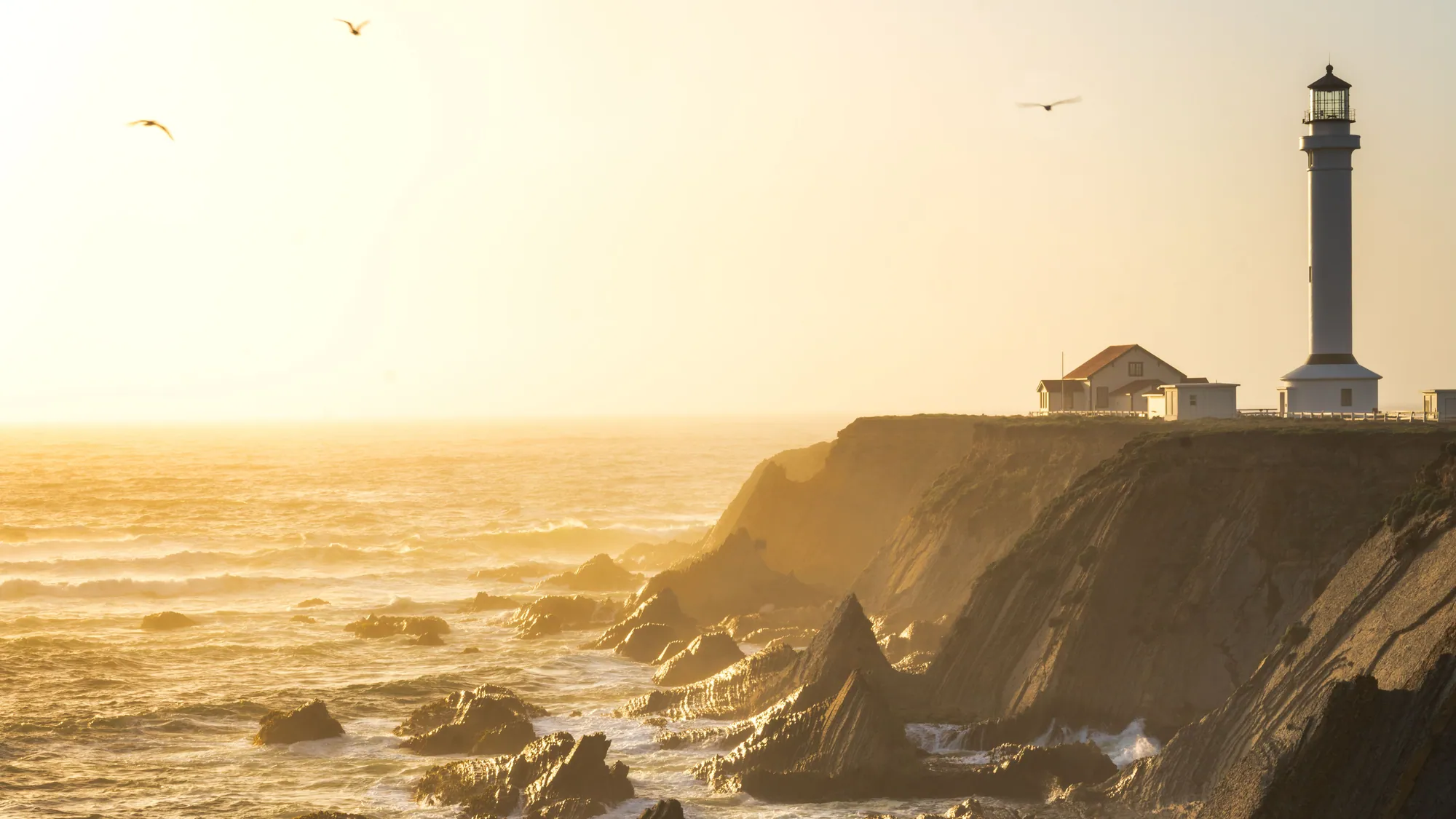
A Quiet Corner on the Coast
Every golfer has one course they love beyond reason. Bernard Darwin’s was a small links on the Welsh coast, and he wrote about it like a man coming home.
St Andrews Through Darwin’s Eyes
In 1910 Bernard Darwin walked the Old Course as an admiring pilgrim, bunker by bunker and plateau by plateau. His account is a portrait of a golfing town, and of a course that never once looked easy.