The Joys of Winter Golf
Frost on the fairways, the light gone by four, and the whole course to yourself. A case for keeping the clubs out of the cupboard when the weather turns.
By GolfProse · · 5 min read
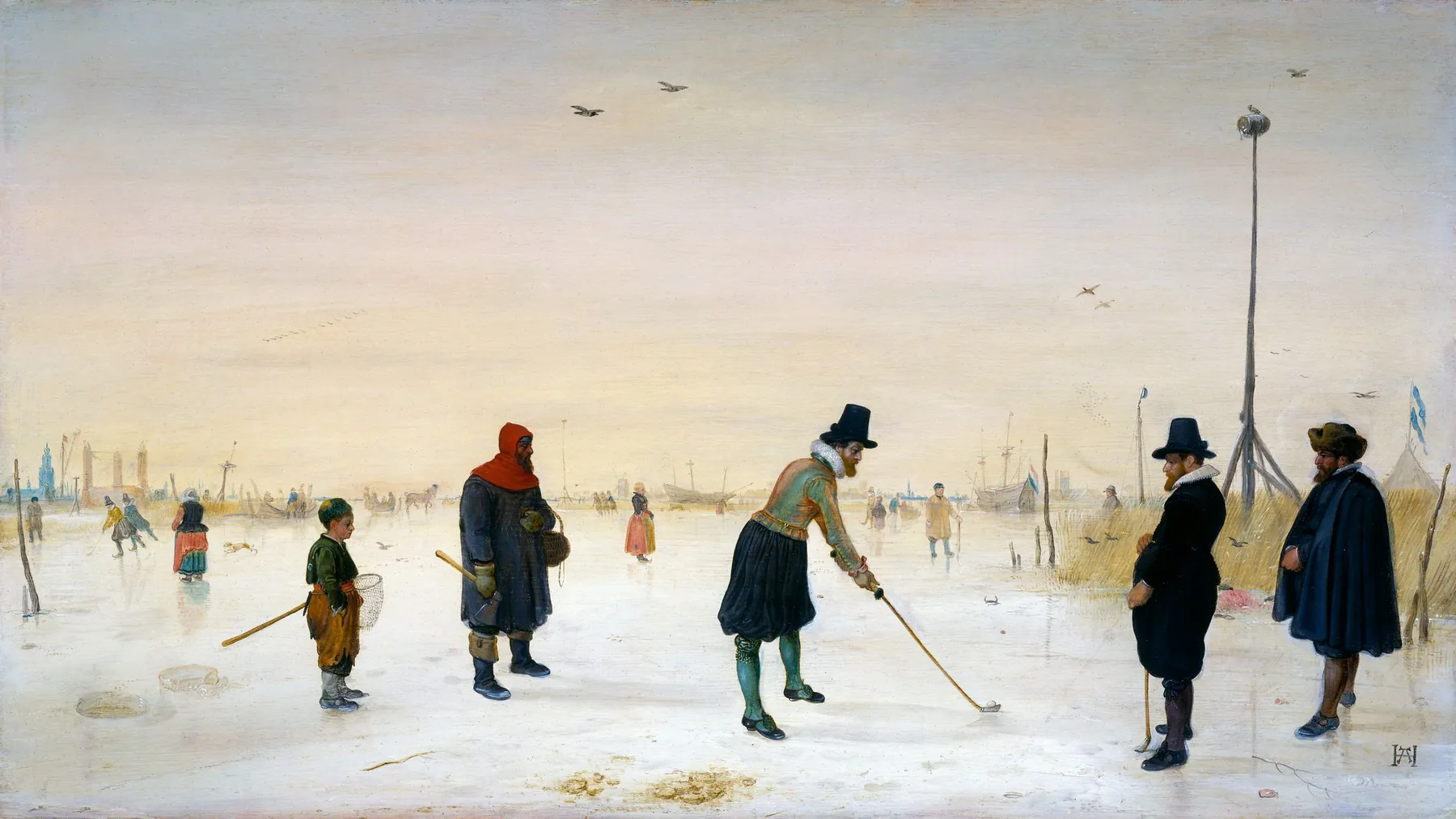
There comes a morning, usually in November, when you open the curtains and the lawn has turned white. The sensible thing is to go back to bed. The golfer’s thing is to find a second sweater and go and look at the course.
Winter golf is not for everyone, and nobody should pretend it is. The ball does not fly as far, the ground is either iron or porridge, and your fingers will at some point stop speaking to you. And yet, for a certain kind of golfer, the cold months hold some of the best rounds of the year.
The course to yourself
P.G. Wodehouse caught the spirit of it at the start of “Sundered Hearts.” Snow is falling lightly on the links on a December evening. The Oldest Member, by the smoking-room fire, watches a ball appear over the brow of the hill and trickle to within a yard of the hole. A young man in a tweed suit holes out, comes in announcing that he is frozen stiff, and orders a hot drink.
He has no regrets. “You get the course to yourself, for the world is full of slackers who only turn out when the weather suits them.”
That is the first and greatest pleasure of winter golf. The summer queues on the first tee disappear. There is no waiting, no hurrying, no couple behind pressing you along. You can play at your own pace, hit a second ball when you feel like it, and hear nothing but rooks and the crunch of your own footsteps. The course seems larger and older, as though it has been returned to itself.
No close season
Harry Vardon, in his closing reflections in The Complete Golfer, observes that golf, unlike cricket and football, has no close season. He meant it as a professional’s complaint: the cricketer gets a rest, the golfer is expected to play his best all year round. For the amateur, the same fact is a gift. Nobody tells us to put the clubs away. If we want to play on a bright January morning, the game is waiting.
And there are such mornings. Bernard Darwin, revisiting Felixstowe, the course of his childhood, describes coming back to it on “one of the most perfect of winter golfing days, with the sun shining on the sea and the red roofs of Baudsey in the distance.” Anyone who has played a links in clear winter light, low sun on the dunes and the sea a hard blue, knows exactly what he means. You can read the full account in his chapter on East Anglia.
The hard days
Darwin was honest about the other kind too. At Sandwell Park he played in flurries of snow and a piercing wind, “rendering useless any number of waistcoats and mittens, and robbing the fingers of all power of gripping the club.” That account, in his chapter on Yorkshire and the Midlands, is a fair warning. He was no softer on Blackheath, where he reckoned three rounds on a cold, blustery winter’s day a serious undertaking.
Winter golf asks for a little cunning. Vardon, in his general hints, offers one piece of advice that every frost-bitten putter should learn by heart: “When playing in frosty weather, do not take it for granted that because the greens are hard they are also fast.” The frozen surface is covered, he explains, with tiny knobs that slow the ball down. Many a confident putt has died a yard short for exactly that reason.
The ground changes everything else, too. On a frozen fairway the ball bounds away like a skimmed stone; on a sodden one it plugs where it lands. In a chapter of Darwin’s book written by a cheerful long-handicap member, a London course is confessed to be little better than a mud heap in winter and had a local rule allowing a buried ball to be lifted and dropped from October to March. The lesson is to play the course you find, not the one you remember from June. Keep the ball low, expect less carry and more roll on hard ground, and treat a short game that merely gets you near the hole as a triumph.
Wrapping up
Dressing for winter golf is an old craft. The aim is warmth without bulk, since a swing wrapped in three thick jumpers is barely a swing at all. Thin layers are better than thick ones: something close to the skin, a wool sweater, and a windproof outer layer you can take off as you warm up. A hat matters more than you think, and so does a pair of mittens to wear between shots.
Vardon disliked gloves for playing, preferring the feel of bare hands on the grip, but he was thoughtful about footwear. Keep your shoes soft, he says, and “Apply dubbin to them in the winter.” The equivalent today is simple enough: dry, waterproof shoes, cleaned and looked after, and a spare pair of socks in the bag. Cold feet have ended more winter rounds than bad scores.
Carry a flask of something hot, and a few spare balls, because white ones vanish against frost. Remember that the light goes early, so start in good time and do not be too proud to call it a day after nine holes.
The warm drink after
The best part of winter golf may well be the moment it ends. Hands stinging, cheeks burning, you push open the clubhouse door and the warmth hits you. There is a fire, or at least a radiator, and something hot in a cup. The young man in Wodehouse’s story knew this. He came in from the snow and went straight to the fire.
There is a particular contentment that belongs only to that hour: the sense of having earned your comfort, of having been out in it while sensible people stayed in. The score barely matters. What you remember is the frost on the fourth green, the robin by the ninth tee, the moment the sun came through. Then someone suggests another, and the round goes on at the nineteenth hole.
Spring will come, and with it the crowds. Until then, the course belongs to those who are willing to go out and claim it.
More from The Good Life
See all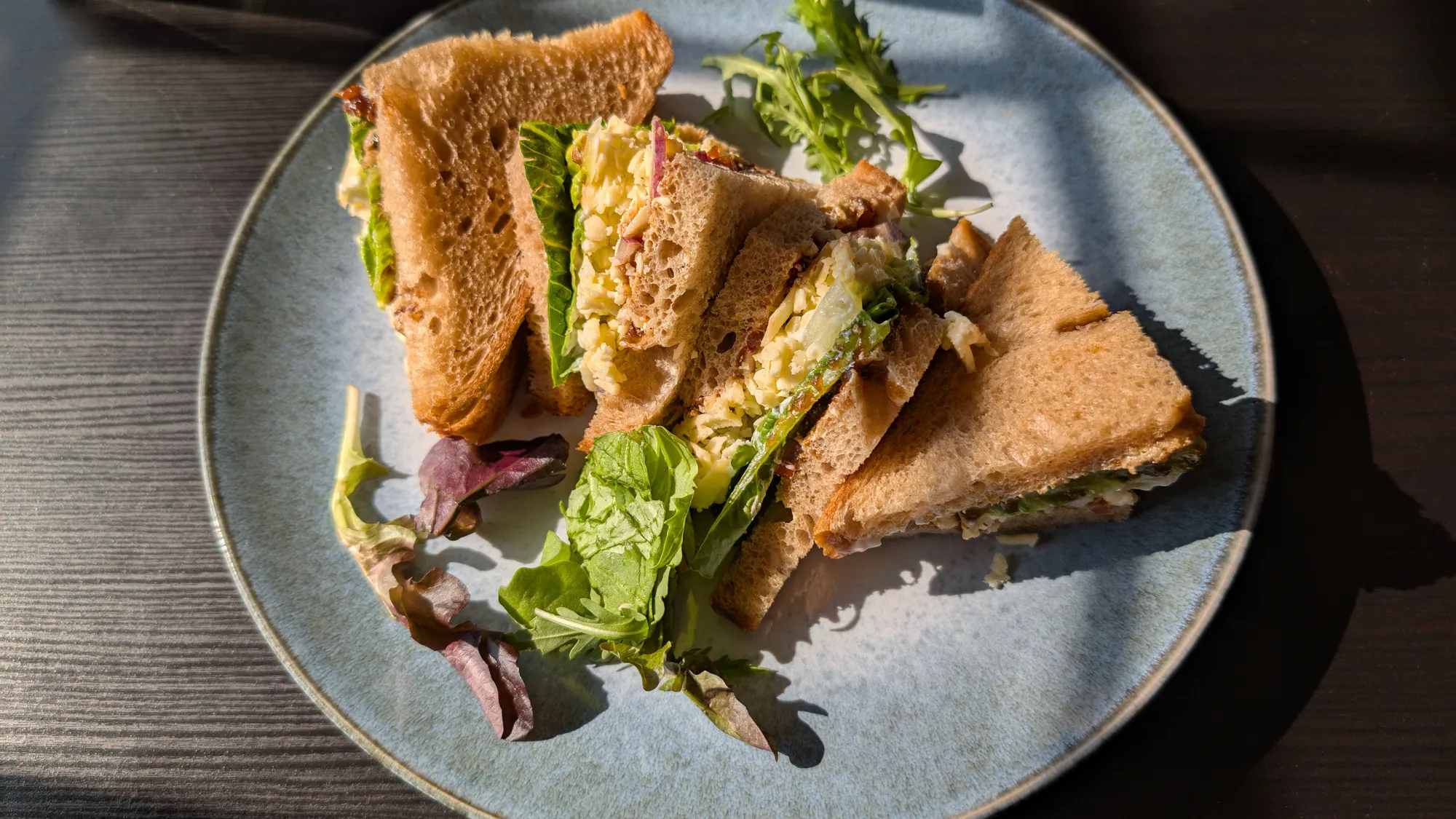
The 19th Hole
On good food, great company and the traditions that make the clubhouse the best part of the day for so many golfers.

The pleasure of good company.
Polished shoes, a favourite sweater, a partner who knows when to say nothing. On the small rituals that make a round worth remembering.
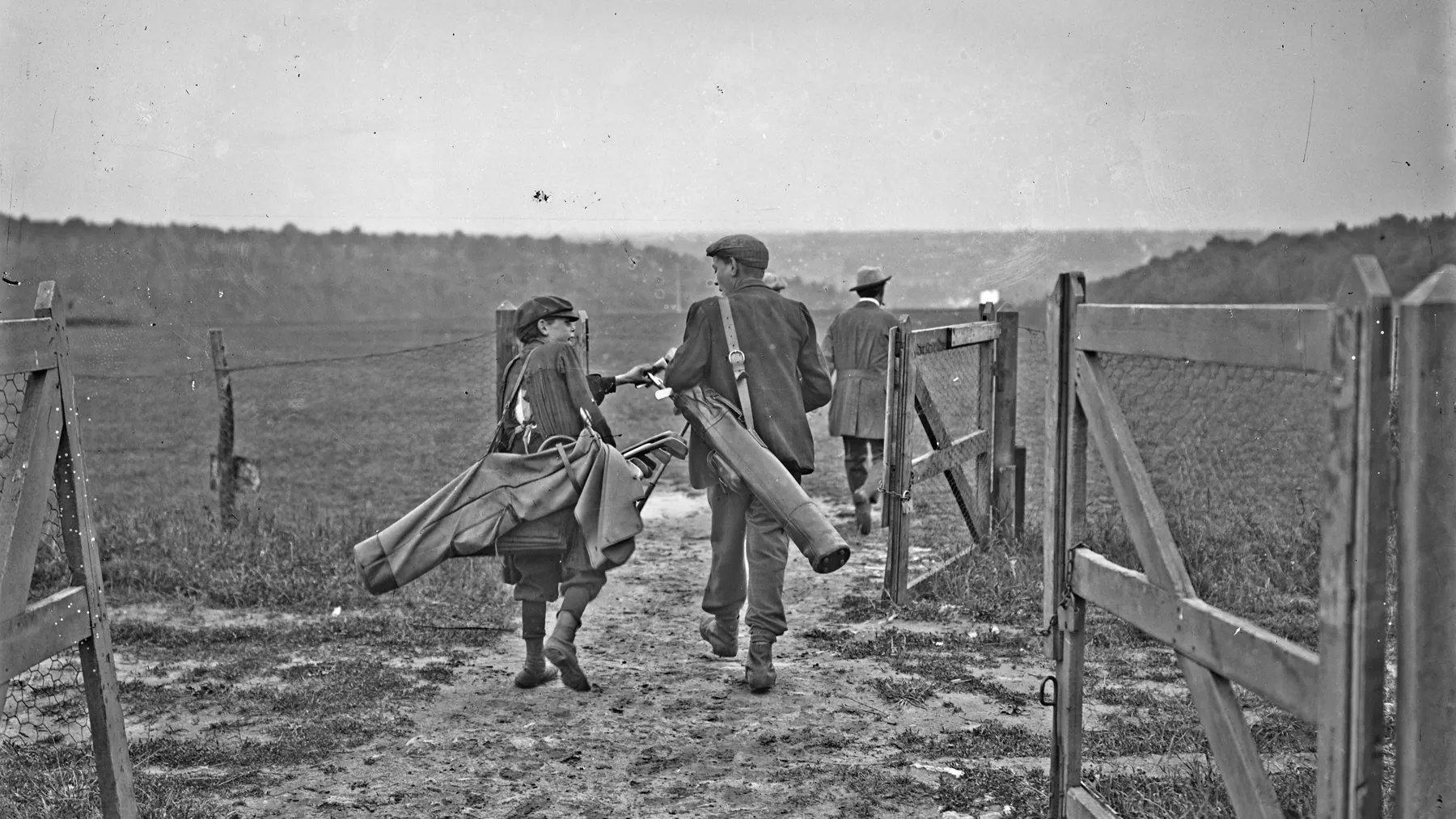
The Magic of Plus Fours
Can a pair of trousers make you a better golfer? P.G. Wodehouse thought it worth a story, and the question has never quite gone away. On dressing for the game.