Rodney Spelvin and the Perils of Poetry
Across three stories in The Heart of a Goof, Wodehouse’s most insufferable poet pursues Jane Packard, torments William Bates, and runs into the one force more powerful than verse.
By GolfProse · · 5 min read
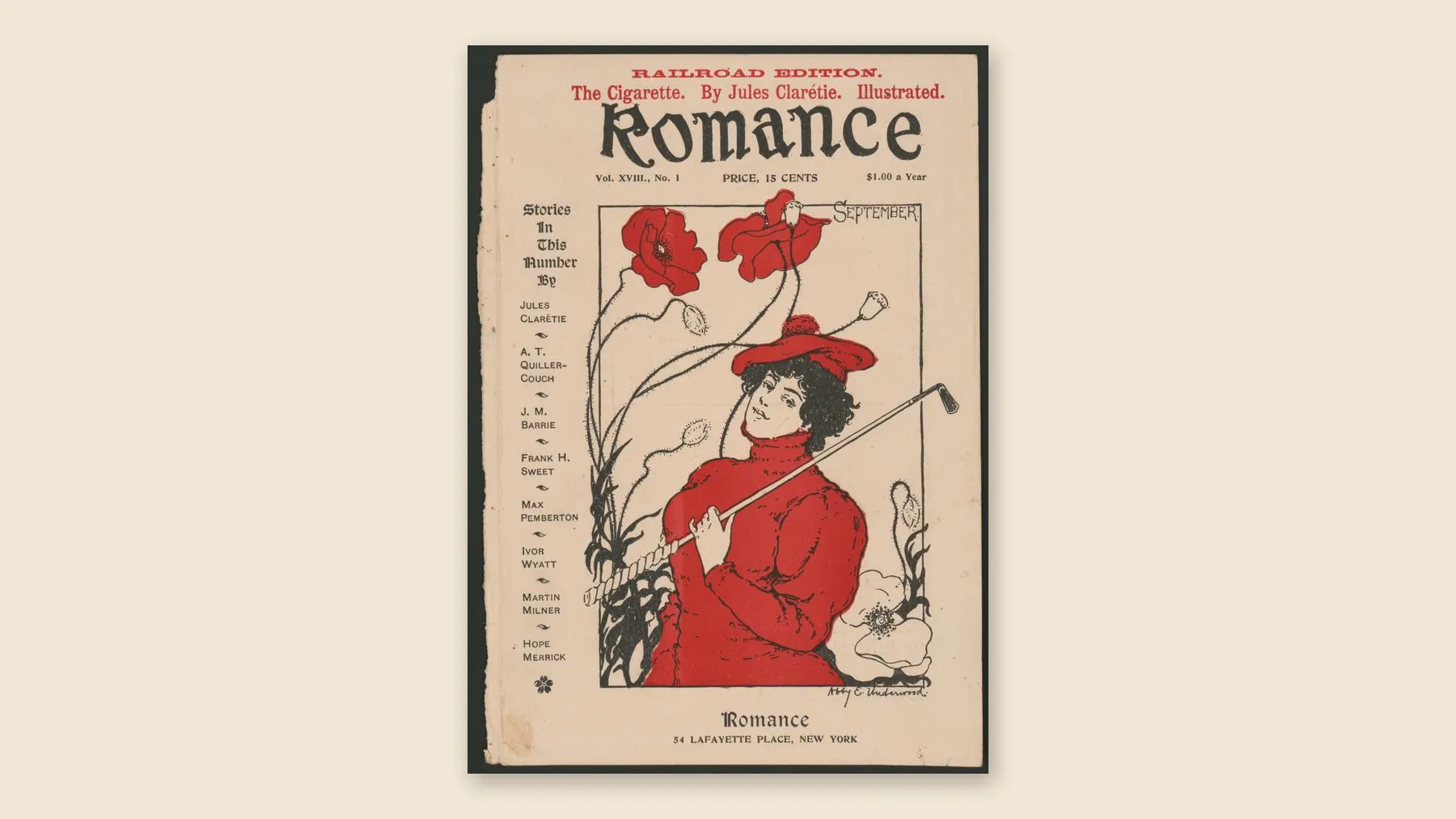
Every golf club has a Rodney Spelvin, or knows one. He is the guest who hums while you putt, who admires the view while you hit the drive of your life, and who asks, when you have just taken four putts, whether you won. Wodehouse gave him dark good looks, a gift for flattery, and a cousin on the stage, and then made him the villain of three stories in his second golf collection, The Heart of a Goof.
Taken together, the Jane Packard, William Bates and Rodney Spelvin stories form something close to a short comic novel, told across several years by the Oldest Member to a club secretary who has heard it all before and would very much like to get away. Each one is complete in itself, but they are best read in order.
The slowest suitor in the county
“Rodney Fails to Qualify” begins with a romance that is barely moving. Jane Packard and William Bates have grown up together, play together every day, and have practically identical handicaps. Everyone assumes they will marry, if William can ever bring himself to propose. He is a huge, placid young man who once spent fifteen minutes choosing between a chop and a steak. Three years in, he has got as far as a bunch of roses and a box of chocolates.
Jane, meanwhile, has been reading a desert romance called The Love that Scorches, full of Arab chiefs and searing breath. So when a tall, dark stranger turns up on the first tee and introduces himself — “I am, in my humble fashion, a poet” — the Oldest Member’s heart sinks.
William is not worried. The fellow doesn’t play golf, and there are three things in the world that William holds in the smallest esteem: “slugs, poets, and caddies with hiccups.” Ten days of dances and moonlit picnics later, Jane is engaged to Rodney.
The story’s climax comes at the qualifying round of the Ladies’ Invitation Tournament at Mossy Heath, where Jane needs only to get round to qualify. Rodney walks with her, humming old French love songs. When she asks him to stop so she can concentrate, he tells her, “Putt on, child, putt on,” and then shouts at the scenery in the middle of her stroke. Matters come to a head at the short seventh, an island green guarded by a river, with a rowing boat, a niblick and a stroke count that climbs into the eighties. A silent woman on the bank goes on reading her Vardon throughout, and she is one of the best minor characters Wodehouse ever wrote.
The white violets
“Jane Gets Off the Fairway” takes place years later. Jane and William are married, with a small son named Braid Vardon, and William, who knows he will forget his wedding anniversary, has prepaid a florist to send Jane white violets every year. It is a sound plan with one flaw. He never tells her, and white violets were what Rodney used to give her.
Then Rodney publishes a scandalous novel, The Purple Fan, which Jane reads six times, and they meet by chance in town. He has completely forgotten her. Wodehouse’s account of Rodney playing for time, waiting for some clue to who this pretty woman might be, is a little masterclass in comic cowardice. By the end of the conversation he has told her that he wrote the book for her.
What follows is the darker middle act of the trilogy. Jane moves the family to a studio in town and starts entertaining poets on cushions, and William stands squashed in a corner while his golf goes to pieces. There comes a moment, the Oldest Member observes, when every wife sees her husband as “one of Nature’s Class A fatheads.” For Jane the moment lasts rather a long time.
What brings her back to her senses is golf, naturally, and specifically the sight of her son holding a mashie the wrong way. It is the funniest scene of maternal guilt in Wodehouse. Jane imagines her grown son reproaching her for never teaching him the Vardon grip. We won’t spoil the last pages, except to say that the violets have a part to play.
Rodney sees the light
“The Purification of Rodney Spelvin” completes the cycle and, as the title promises, redeems its villain, after a fashion. William’s younger sister, Anastatia, a small, rose-leaf girl who reached the semi-finals of the Ladies’ Open, comes to stay to teach little Braid his chip shots, and confesses she is in love with Rodney Spelvin.
Jane, horrified, takes her cue from a film she has seen at the village cinema and resolves to go to the libertine and beg him to spare the girl. The plot that follows involves a lunch spent entirely on the weather, a mistaken telephone call, a jealous husband listening on the extension, two very polite detectives from the Quick Results Agency, and a burglary through a scullery window. Everyone ends up hiding in Rodney’s studio.
We won’t give away what they overhear. But Rodney’s final speech, in which he declares himself “not worthy to polish the blade of her niblick,” shows Wodehouse at his most generous. The poet isn’t destroyed. He is converted.
The joke beneath the joke
On the surface these stories are a long joke at the expense of poets, and Rodney is a gloriously easy target. But Wodehouse was a professional writer himself, and the joke cuts both ways. William is no hero. He is slow, unromantic and forgetful, and the stories never pretend otherwise. Jane’s romantic streak is treated with real sympathy, even as it lands her in the river.
What the Oldest Member is really defending is not golf against poetry but steadiness against glamour: the friend who rows the boat and counts your strokes without comment, against the charmer who asks if you won. Golf just happens to be the test that sorts one from the other.
The three stories close out the collection, and the last line of the book, which we won’t quote, is worth saving for the end. If you are new to the Oldest Member, start with the title story or with The Clicking of Cuthbert, which we introduced in “The first tee is a promise of a better day.” Then come back for Rodney. Just don’t let him walk round with you.
More from The Library
See all
The first tee is a promise of a better day.
A century on, P.G. Wodehouse’s golf stories still read like dispatches from your own clubhouse — and they begin with a young man trying to give his clubs away.

A Golfer’s Bookshelf
Five classic golf books, free to read in full in the GolfProse Library — and where to begin with each.
Harry Vardon’s Lessons, a Century On
The greatest golfer of his age grew up making clubs from hawthorn in Jersey. His book is part memoir, part manual, and still full of good sense.